
Our story
Inside the explorer's mind.
Why we are called MindPalace, what we believe, and how many explorers make one mind.
Looking in
Four rooms, one hall. Go in any order.
The host wasn't expecting anyone.
First room: why MindPalace? →01 · Why MindPalace?
A palace for what a company knows.
A memory palace keeps each thought in a room you can walk back to. These four have no room yet.
Give a thought a room:
Now find one again:
Why the name
A memory palace is an old way of remembering. You put each thing in a room of a building you know, and later you walk the rooms to find it again. Greek and Roman speakers held whole speeches that way.
A company keeps what it knows in dashboards, documents and people's heads. Three teams count the same thing three ways, and nobody remembers why a decision was made. Most of it has no room. Companies have places to store information and tools to analyze it, but rarely a place to understand themselves. MindPalace is that building for a company: a place where what the business knows is kept where it can be found, questioned and built on.
02 · The creator
Smart teams, plenty of data, weeks to decide.
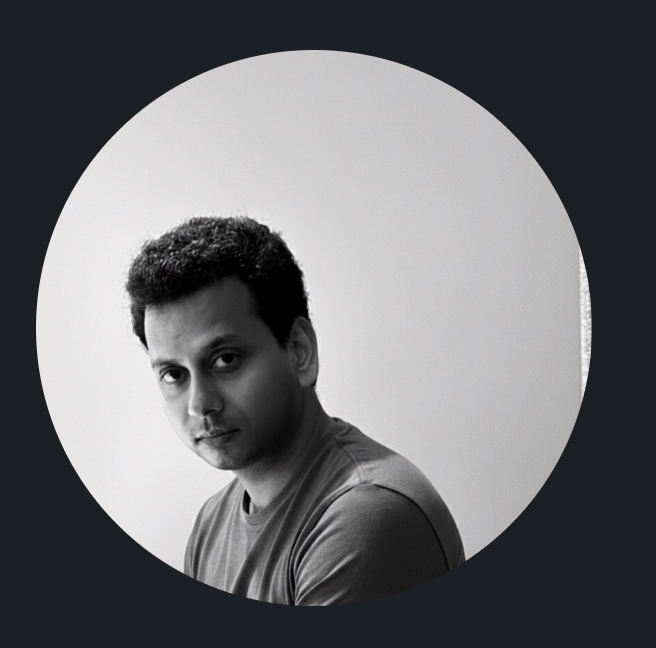
Years with growth-stage companies, where AI, data infrastructure and business strategy meet, kept showing the same gap between having data and using it. MindPalace is built to close it.
Read what I wrote along the way:
The founder's story
I've spent years working with growth-stage companies at the intersection of AI, data infrastructure and business strategy. The pattern was always the same: smart teams, plenty of data, and yet decisions still took weeks because nobody could connect the dots fast enough.
Across every engagement I kept coming back to the same core problem, the gap between having data and actually using it to make better choices. No amount of consulting could fix it at scale. The existing solutions, more dashboards, chat-based analytics, AI copilots, were all iterating on the same broken paradigm. The problem wasn't the interface. It was the architecture.
That's why I built MindPalace from scratch: a new architecture, designed from first principles to close the gap between data and decisions.
03 · How we think
Understanding first. Then evidence. Then people.
- 01A number is not an answer.
- 02A connection is a claim.
- 03People decide.
- 04An organization learns.
A connection nobody has checked yet:
What we mean
A number is not an answer. It has a definition and a source, and they matter more than the digits.
A connection is a claim. Someone checks it before anyone leans on it. A pattern is not a cause; a cause is tested by changing something and measuring what happens.
People decide. The machine proposes, computes and explains. It never runs the business.
An organization learns. What was decided, why, and what happened should be kept, so the next question starts further along. That room is being built.
04 · Many explorers
Six views of one business.
Each team sees a part, and each is right about the part it sees. Ask one.
What each one counts
Marketing counts sign-ups. Growth counts subscribers lost. Product watches who finishes setup. Customer Success hears who is unhappy. Finance counts revenue. Operations keeps it running.
Put the parts together and one story appears that none of them could see alone. That is what the hall is for.
05 · One mind
Many explorers. One mind.
Watch what each one brings become one model of the business.
Today MindPalace builds the foundation: the Living Map, definitions your people review, and analysis grounded in them. The ring in pencil is where it is going: organizational decision infrastructure, one shared, governed understanding of the company that its people and its AI agents can reason and investigate from, while people stay accountable for the decisions.
Where it's going
Reasoning about decisions, strategy, experiments, simulation, and learning from what happened: the longer ambition, drawn in pencil around the model until it is built.
Or read our writing.